
Washington County’s Multi-Day Arrest Reports
The county publishes no 72-hour list, no weekly booking page, and no multi-day public roster. The Sheriff's Office press-release and news page sits closest to official. It announces incidents, though not every booking. Its lifecycle is stated plainly on the page. Releases archive after 60 days. They come down after 120. That schedule governs the webpage, not how long an underlying report stays obtainable. City blotters work differently. Express News and Discover Hometown carry West Bend and Hartford blotter material. It is sourced from the police departments' own social posts. Older Germantown items trace back to department documents. One story can cover a week of calls, arrests, warrants, and transports. Yet cases get left out, citations sneak in, and publication sometimes lags the incident period. Treat a blotter as secondary reporting unless the article links straight to the agency.
A wider window is never a full list. Multi-day reports pick and choose, skipping citation-only events, protected matters, releases, and arrests another agency handled on its own.
How to Read a Washington County Blotter
Treat a blotter as a dated account with a paper trail. The agency named may hold the arrest. Sometimes the Washington County Jail takes custody later. A mention of a warrant proves nothing. That warrant may no longer stand. Keep the incident period, publication date, agency, and record type in view at all times.
- Identify whether the item comes from the Sheriff’s Office, a city police department, a police social post, or a newspaper rewrite.
- Record the incident period separately from the article date. A weekly page may be published after the listed events.
- Mark the item as arrest, citation, warrant, crash, service call, or other event instead of treating every line as a jail booking.
- Check Wisconsin VINE for current county custody when a person is named, and do not infer release from a missing result.
- Use CCAP for a public circuit case and request the agency record when the report itself is needed.
Need same-day answers instead? Use Arrested Today. It covers the absence of any official 24-hour county table and points to the immediate custody fallback. For county-wide records, booking photos, warrants, and court detail, the Washington County recent-arrests home page holds the fuller picture.
What a Washington County Arrest-Report Entry Shows
Publishers format entries their own way. A blotter entry reads like a short narrative. A Sheriff's press release describes an incident and names the reporting agency. The field map below keeps a news item from being mistaken for a booking record.
| Entry detail | Meaning and limit |
|---|---|
| Agency | The department that supplied or created the report. It controls the underlying agency record. |
| Incident period | The date range covered by a weekly or monthly item, not necessarily a booking date. |
| Publication date | When the newspaper or agency posted the item. It may follow the event. |
| Event type | Arrest, citation, warrant, service call, or another police activity. |
| Charge language | An charge or agency description that can change in court. |
| Custody statement | A reported placement, which should be checked through VINE or the jail. |
| Photo | A news image or agency-supplied image, not proof of a public booking-photo release. |
| Court follow-up | A separate CCAP event, if a public circuit case exists. |
A name alone won't safely match a person. Compare the agency, the date, and the case details. Leave out private addresses, juvenile material, victim information, and anything else that adds nothing about the source itself.
Weekend and Holiday Arrest Reports
Weekend and holiday coverage tends to look busier. Agencies and local outlets often publish once a batch of events has been gone through. That pattern reflects timing, not new bookings. An officer's arrest can end in a citation, municipal court, county custody, or release. A paper may print the item after custody has already shifted. The Sheriff's press-release page is the county's official news outlet. Its archive schedule makes the retrieval date matter. A vanished release proves nothing. It shows neither that no report existed nor that a case was cleared. Request the underlying report from the proper records custodian.
The official Washington County news page provides the press-release archive and its publication lifecycle.
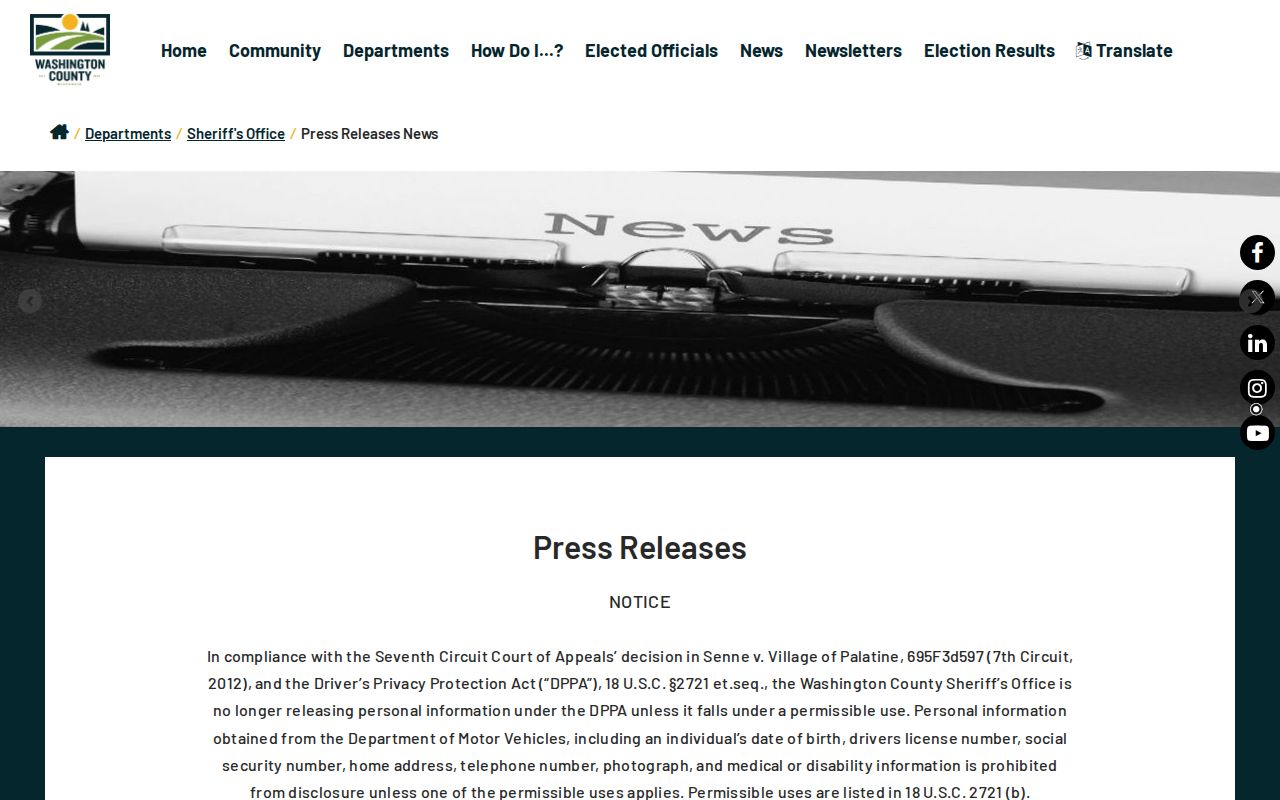
The archive gives solid, agency-attributed context. Just never relabel it as the county's complete arrest log.
Weekend check: keep the incident range and publication date, then confirm current custody separately through Wisconsin VINE or the jail.
How City Police Blotters Shape the Arrest Log
Express News credits West Bend blotter material to the police department's Facebook page. Hartford blotter items carry the same Facebook-page credit. Germantown blotter PDFs can name documents. Those documents come from the Germantown Police Department. That sourcing language carries real weight. It tells a reader where to send a records request. It also stops a local newspaper from being mistaken for the jail custodian. The West Bend police blotter example is a local-news republication. It uses a weekly service-summary format. Its reports may carry arrest or warrant narratives. They never claim to list everyone booked at Washington County Jail. Check the city police page and the county jail page separately.
The West Bend local blotter source shows how a city police post can become a dated news report rather than a county booking row.

The image documents provenance and format, nothing more. It is not a gallery, and it shows no one's current custody status.
Washington County Arrest Archives and Retention
Hartford takes its own archival path. Its monthly police reports run from 2019 through 2022. An annual archive stretches to 2024. That material is statistical, though. It tracks enforcement patterns rather than named bookings. No roster of people arrested in Hartford comes out of it.
The Hartford monthly police archive is municipal record-keeping, not a county booking feed. Washington County's web news keeps a 60-day and 120-day lifecycle. Chapter 94 frames the county's broader retention rules. Want an older booking sheet or photo? Ask the records custodian which schedule governs the arrest report.
The Hartford police archive illustrates the difference between a municipal historical report collection and a current multi-day booking log.
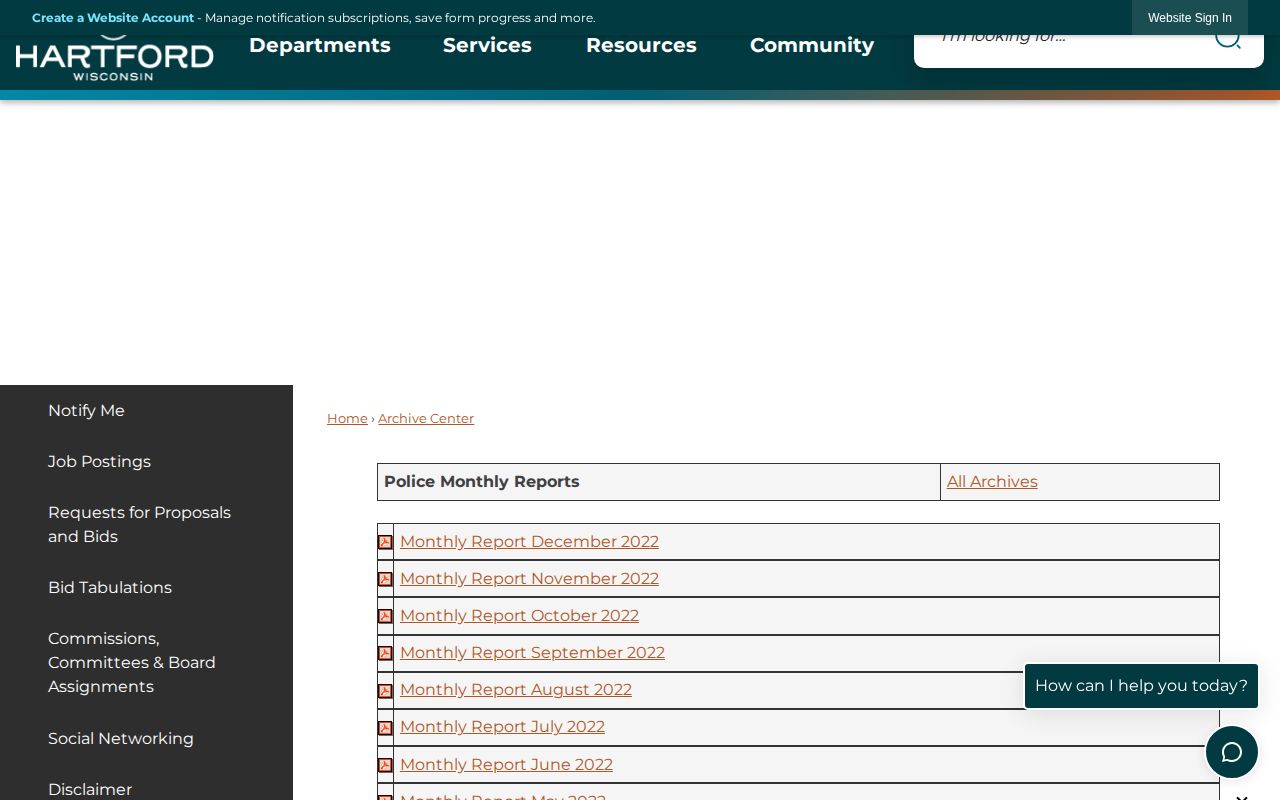
How far back the records go depends on the agency. A page spanning several years can still lack a full arrest list or any single person's booking entry.
What the Washington County Arrest Log Leaves Out
Multi-day reports have blind spots. Citation-only events rarely appear. Juvenile matters, municipal cases, and sealed or redacted records often stay out too. Arrests made by outside agencies can drop off. Anyone released before a news item posts can drop off too. A newspaper picks what fits its space. A press release can vanish even while the agency keeps its report.
For a current, name-specific custody question, use the VINE Arrest Check. Need the record or booking photo? Ask the arresting agency or the Sheriff's Office directly. Case outcomes live in CCAP and the Clerk of Circuit Court. Keeping each source type straight prevents confusion. A reported arrest, a custody status, a warrant notice, and a court disposition stay distinct claims.
Custody can also move. A later handoff sends the record to the Wisconsin Department of Corrections offender locator. That state search is not a county booking archive. Someone missing there may still sit in Washington County Jail or VINE. Agency, jail, court, and DOC links each answer a different question.
Treat third-party coverage as secondary. Major mugshot brands offer no Washington County Wisconsin section. The county-local aggregator page is unofficial. Official agency records and court records remain the reliable route.